
The Wedding Resale • Seller’s Guide
Your wedding story.
Their next chapter.
Give your wedding items a new home with a listing buyers can understand. This wedding resale seller’s guide covers clear photos, thoughtful pricing, honest descriptions, and helpful conversations.

A great listing makes the decision easier. Show what you have, explain its condition, and make the next steps clear. The Wedding Resale connects buyers and sellers; agree directly on payment, delivery, and return terms before completing a sale.
01 • Help buyers see the details
Take photos that answer questions.
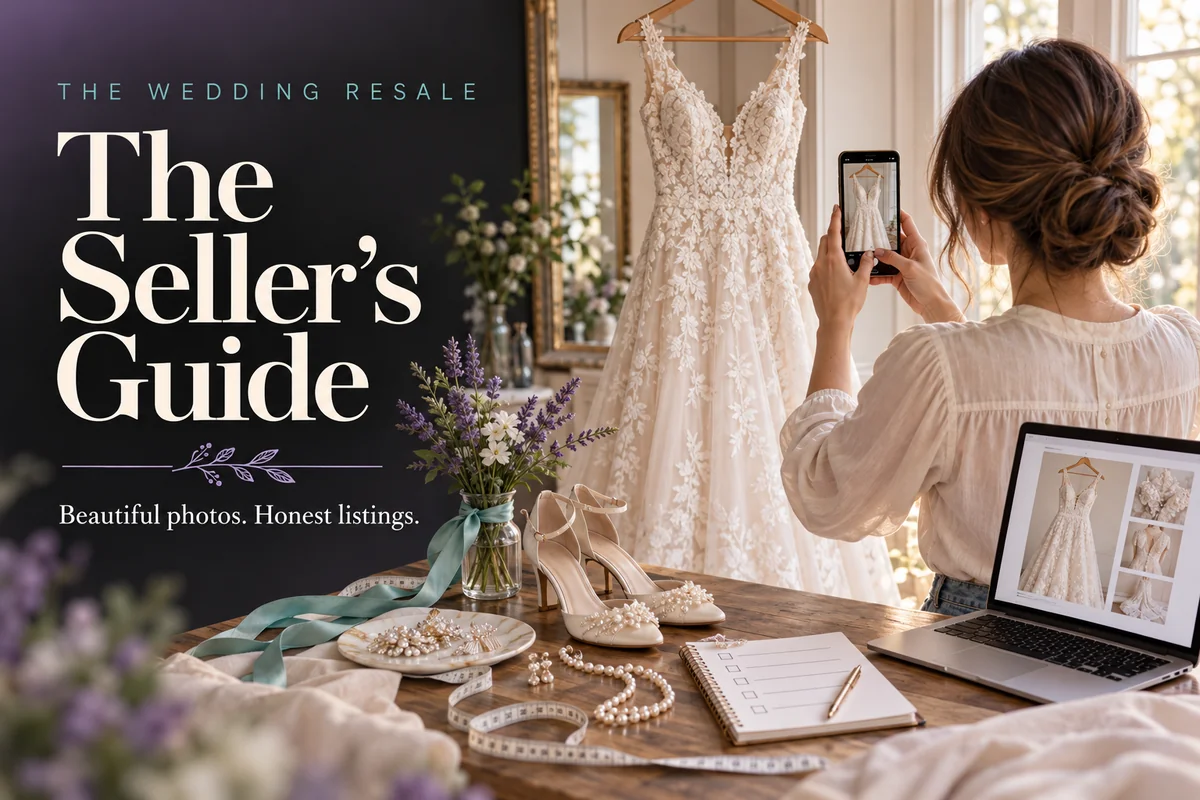
You do not need a professional camera. A phone, soft daylight, and a tidy background are a strong starting point. Photograph the actual items as they look today.
Start with a clear cover
Show the entire item with space around it. Use indirect window light and a simple background. Avoid harsh flash, distracting clutter, and filters that change the color.
Choose a cover image that lets buyers recognize the item even on a small screen.
Show every useful angle
Include the front, back, sides, labels, closures, and important details. Photograph bundle contents together, then add close-ups of individual pieces.
A photo beside a measuring tape can help explain dimensions.
Make flaws easy to see
Photograph stains, chips, scuffs, missing parts, or repairs clearly. Point out each issue in the description so buyers know where to look.
Your wedding-day photo can show styling, but add current photos that show present condition.
Aim for a useful set of photos: one full-item view, a back or alternate view, detail shots, a size or quantity reference, and clear photos of any flaws. Use your own images or images you have permission to publish. Remove addresses and personal information from receipts.
For wedding dresses
Show the full front and back, bodice, train, hem, lining, zipper or buttons, and designer and size labels. Describe alterations separately. Keep delicate fabrics off dirty surfaces and avoid hanging methods that could damage them.
For decor and accessories
Show exact quantities, dimensions, bases, attachment points, and included hardware. For shoes, photograph soles and heels. For veils, show the full length, comb, edges, and any snags.
02 • Price for the next owner
Set a price you can explain.
The original purchase price provides context, but buyers also consider condition, current alternatives, delivery costs, and preparation. Start with comparable items rather than a fixed percentage off retail.
- Find close comparisons. Compare the same brand or model where possible, with similar size, age, quantity, and condition. Completed sales are more useful than asking prices when available.
- Adjust for the details. Consider alterations, visible wear, missing pieces, cleaning needs, and whether the item is personalized.
- Account for the buyer’s total. A bulky decor bundle may be attractive locally but expensive to ship. State whether delivery is included.
- Choose your negotiating position. Decide your asking price and minimum acceptable offer before messages arrive. Say whether the price is firm or offers are welcome.
- Review the response. If interest is limited, improve photos and details, then revisit the price. No price or listing upgrade guarantees a sale.
Bundle with a purpose
Group items that naturally work together: matching table numbers, coordinated candleholders, or a ceremony decor set. State the count of each item and whether you will split the bundle.
Keep savings claims accurate
If you mention the original price, explain what it included. Do not compare a used item with an inflated retail price or claim a discount you cannot support.
Example—not a market valuation: If similar sets are listed around $100–$140, use that as a starting point for research. A damaged or incomplete set may need a lower price. Asking prices alone do not tell you what buyers actually paid.
03 • Replace guesswork with specifics
Write a description buyers can rely on.
Lead with the item, then cover condition, measurements, quantity, and logistics. Use short paragraphs and everyday language. Choose the closest available listing category so the right buyers can find it.
Make the title specific.
Dress example: “[Designer] [Style] Wedding Dress — Altered, Ivory, Label Size 10”
Decor example: “24 Gold Candleholders — Mixed Heights, Local Pickup”
Only include details that accurately describe your item. Avoid calling a dress “unaltered” unless you know that is true.
Copy this listing template.
Item: [Name, brand, model, color, and material if known]
Included: [Exact quantity, accessories, hardware, packaging, or other pieces]
Condition: [How it was used, current wear, stains, damage, repairs, or missing parts]
Measurements: [Actual dimensions and units; for clothing, label size plus current garment measurements]
Alterations or customization: [Hem changes, tailoring, personalization, or other modifications]
Cleaning and storage: [What was cleaned, when, and how it has been stored; state if unknown]
Price: [Amount, whether offers are welcome, and whether shipping is included]
Delivery or pickup: [General location, shipping availability, dispatch timing, and collection arrangements]
Payment and returns: [Accepted methods and proposed return or cancellation terms, subject to applicable rules]
Questions: Happy to provide more photos or measurements before you decide.
Be precise about condition. “Used once; two small wax marks on three holders, shown in photos” is more useful than “like new.” If you do not know the material, history, or designer, say so instead of guessing.
Want to understand what buyers are checking? Explore our used wedding dress checklist and secondhand decor guide .
04 • Make the conversation helpful
Respond clearly, calmly, and consistently.
Answer the question the buyer asked, then offer the next useful detail. If you need time to check a measurement or shipping cost, say when you expect to reply.
Availability reply
“Hi! Yes, it’s available. The listing includes [items], and the asking price is [amount]. I can offer [pickup/shipping]. Would you like more photos or measurements?”
Offer reply
“Thanks for your offer. I can accept [amount] for [exact items], with [delivery terms]. If that works, let’s confirm the details in writing before arranging payment.”
Measurement reply
“I’ll check that and send a photo showing how I measured it by [time]. The label says [size], but the item has had [alterations], so the current measurements are important.”
Keep the sale organized.
- Use consistent information across the listing and your messages.
- Agree on any hold, deposit, or cancellation terms before accepting money.
- Do not promise the same item to multiple buyers.
- Confirm the exact items, total price, and delivery arrangement in writing.
- Update availability when the item is committed or sold, using the listing controls available to you.
Respect the buyer’s decision. Clear answers build a better conversation than pressure. Avoid invented deadlines or claims that other buyers are waiting unless that is true.
05 • Finish with care
Make the handoff as clear as the listing.
Shipping
Agree on the shipping cost and dispatch timing. Package for the item’s weight and fragility, photograph its condition and packaging, and keep shipment records. Send tracking when available.
Check your payment provider’s current requirements before sending to an address different from the transaction details.
Local collection
Confirm the meeting time, suitable location, item dimensions, and loading needs. Give the buyer a reasonable chance to inspect and count the items.
Keep a written record of the items handed over and the agreed payment.
Check payment status inside the provider’s official app or website before releasing an item. If a payment or refund request seems unusual, pause and contact the provider through its official support channel. Never share passwords or verification codes.
If a buyer reports an issue, review the listing, messages, and photos. Respond professionally and discuss the next step based on your agreed terms and any applicable provider rules.
Your listing-ready checklist
A few checks before you publish.
Check off each step as you prepare. Checkmarks are temporary and are not saved.
Seller questions, answered
Start with a little clarity.
Can I sell a wedding dress that has been altered?
Describe the alterations clearly and provide current garment measurements. The original label size alone may not reflect the fit. Let buyers assess whether further alterations could work for them.
Should I clean items before listing them?
Present items neatly, but use care appropriate to the material. Check care labels or professional advice for delicate pieces. Explain what cleaning has been done and any remaining marks. Do not promise that a stain will come out.
Should I sell decor individually or as a bundle?
Bundle matching items that are useful together. Individual listings may suit unique pieces or buyers who need smaller quantities. Either way, make the included counts and price clear.
How much should I discount my wedding items?
There is no single percentage that fits every item. Research comparable items, then adjust for condition, alterations, completeness, delivery, and how quickly you want to sell.
What if I do not receive inquiries?
Review your cover photo, title, category, measurements, delivery options, and price. Improve missing details before assuming the item needs a steep discount. Buyer interest varies, and a sale is never guaranteed.
Make room for someone else’s celebration
Give your wedding finds a new beginning.
You enjoyed them on your day. A clear, thoughtful listing can help the next couple picture them on theirs.